When I had my first assignment as an event trainer at anydoors three years ago, I was nervous. Today, 150 events later, I can say: It was the best decision of my professional life. In this article, I'll take you behind the scenes and share my honest experiences.
How It All Began
I'm Tamara, I live in the Black Forest region of Germany, and I worked as an event manager at anydoors for three years. During that time, I conducted around 150 events as a trainer. My very first contact with anydoors was actually as a spectator: A raft building event in Stuttgart that I happened to walk past. The energy of the participants building their rafts together and then proudly launching them onto the water – that fascinated me immediately. I couldn't help myself and just started helping out, even though it wasn't my job at all.
After the event, René approached me and asked if I could imagine working for anydoors. The concept sounded interesting: organizing and conducting team events with a well-established system in the background. I said yes – and that's how it all started. From my base in the Black Forest, I mainly covered events from Frankfurt southward: Stuttgart, Munich, Freiburg, but also regularly in Austria – Vienna, Salzburg, Innsbruck. My first event as a trainer was a GPS City Rally in Stuttgart with 45 participants. René trained me, explained the tablets, and was there himself the first time. After that, I was on my own – but never alone. The communication within the team is really as you'd wish it to be: uncomplicated, direct, and at eye level.
Variety Is Key: My Event Highlights
In three years, I've conducted pretty much every format that anydoors offers. Here are my personal highlights:
Highland Games – When the Spark Ignites
The Highland Games are the most emotional format for me. When 120 people are divided into clan colors, carrying tree trunks around and giving their all in tug-of-war until they're sore the next day – that's when you know why you do this job. The energy at Highland Games is indescribable.
My best Highland Games experience was with an automotive supplier near Stuttgart. The management participated themselves, put on face paint, and gave everything in the stone put. Afterward, the CEO came to me and said: "That was the best company event we've ever had." Moments like these stay with you.
Beat the Box – When Minds Are Racing
Beat the Box is my favorite indoor format. These escape room boxes are brilliantly designed. I love watching the teams: How they start out clueless, then slowly develop a system, and end up in a flow state. The "aha" moments when a puzzle is solved are simply great.
The best part: This really shows how a team works together. Who takes the lead? Who listens? Who has the creative ideas? As a trainer, I moderate the whole thing, give hints when things get stuck, and ensure the timing works out. But the actual work is done by the teams themselves.
GPS City Rally – The All-Rounder
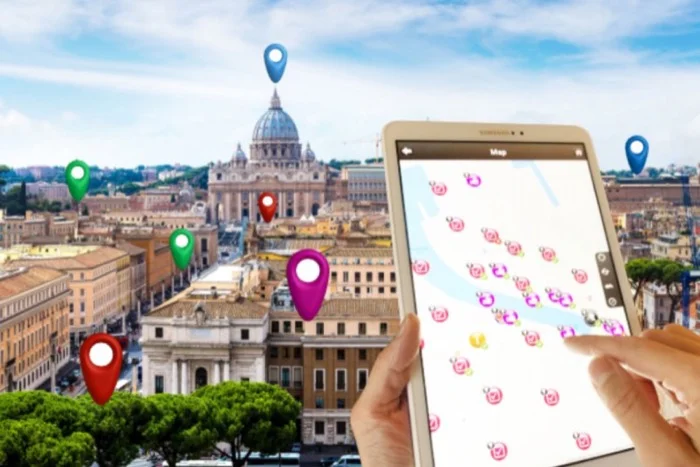
City rallies are my most frequently conducted events – probably 60 out of my 150. Whether Munich, Stuttgart, Frankfurt, Vienna, or smaller cities like Heidelberg, Freiburg, or Salzburg – each city has its own charm. And although the technical process is always similar, no event is like another.
What I love about the rallies: You see the city itself with new eyes again and again. Participants ask questions, research, discover corners that even I didn't know. And at the end, everyone comes back excited, with photos of funny team tasks and stories from the journey.
Domino Challenge – When Perfection Meets Chaos
The Domino Challenge is a special format. Hundreds of dominoes have to be set up so that a chain reaction runs through the entire room at the end. It requires patience, precision, and really good nerves. When someone knocks over a section right before the end, you can literally feel the frustration.
But that's exactly what makes it so valuable: Teams learn to deal with setbacks, support each other, and stay focused despite time pressure. And when the chain reaction works at the end – the cheering, clapping, and hugging – that's pure teambuilding.
What I've Learned in 150 Events
1. Every Team Is Different
You might think that after 150 events, everything becomes routine. Not true. Every group brings its own dynamic. A startup team of 15 people needs a different approach than a department of 80 from a bank. I have to motivate introverted teams differently than extroverted ones. That's what makes the job so exciting – and even after three years, I'm still learning.
2. Weather Is a Mindset
With outdoor events, you learn to accept the weather. I've had Highland Games at 35°C in the shade (sunscreen and lots of water breaks) and city rallies in drizzle (rain ponchos and good spirits). The weather doesn't ruin an event day – attitude does.
Actually, some events in "bad" weather turned out to be particularly intense. When you walk through the rain together, it brings people closer. In the end, the photos of soaked but beaming people are often the best.
3. Technology Must Work
For tech-heavy events like tablet rallies or quiz shows, preparation is everything. I check every tablet, test the app, check the battery. A technical problem during the event is pure stress – for me and the participants. That's why: Better to be there half an hour early and prepare everything calmly.
4. Flexibility Is Key
No event runs exactly according to plan. The bus arrives 20 minutes late, a participant sprained their ankle, suddenly there are 10 more people than registered. As a trainer, I have to be able to improvise. René always says: "We have a solution for everything." And actually: In three years, there hasn't been a problem we couldn't solve.
5. Small Moments Count
It's not always the big victories or the perfect chain reaction. Sometimes it's the shy apprentice who suddenly flourishes at archery. Or the colleagues who only knew each other by email for years and finally have a real conversation at the event. Enabling these small moments of connection – that's the real purpose of teambuilding.
The Challenges
I want to be honest: The job isn't always easy. Here are the challenges I've experienced in three years:
Physically Demanding
A Highland Games day means: 6-8 hours on your feet, hauling equipment, moderating loud and clear. In the evening, I'm exhausted. On double-event weekends, I feel every muscle. Anyone doing this job should bring a certain basic fitness.
Irregular Assignments
Most events take place during the week – companies book their team events when employees are together. The warm season is the busiest, while winter is quieter (except Christmas Rallies and indoor events). The rhythm is irregular, but for me as a freelancer with other projects, it works perfectly.
Expectation Management
Sometimes teams come where individual people obviously don't want to be there. That's human – not everyone likes team events. My job is to reach even the skeptics. Usually it works. Not always. But even a mediocre event is better than no team event at all.
Why I'm Still Here
After 150 events, I could stop. The experience is on my CV, I know all the formats, I have my stories. Why do I continue?
Because no event is like another. The people, the places, the dynamics – everything varies. I learn something new about group dynamics, communication, and myself at every assignment.
Because the anydoors team is right. René and the back office do a great job. Communication is clear, payment is on time, and I feel like part of the team – even though I work freelance.
Because I'm tired but satisfied at the end of the day. When I drive home after an event and scroll through the photos of the day – smiling faces, teamwork in action, shared successes – then I know: This has meaning.
My Advice for Aspiring Event Trainers
If you're considering starting as an event trainer at anydoors, here are my tips:
- Be open to people. You work with new groups every day. If you like people and enjoy speaking in front of groups, you're in the right place.
- Stay flexible. Plans change. The weather doesn't cooperate. Participant numbers fluctuate. Take it easy.
- Prepare thoroughly. Know your event, know your materials, know the process. The better prepared you are, the more confident you'll be.
- Have fun. Your energy transfers to the group. If you're having fun, the participants will have fun too.
- Ask for feedback. After every event, I ask myself: What went well? What could I do better? That's how you grow.
Conclusion: 150 Events – And Hopefully Many More
Three years, 150 events, countless stories. I've seen tears (from laughter and from emotion), I've watched teams grow, I've brought people out of their comfort zones. And I've learned an incredible amount myself.
If you're planning a team event and wondering if it's worth it: Yes, it is. Not because I have to say that, but because I've seen 150 times what a good event can do for a team. The investment in shared experiences pays off – in better communication, in stronger cohesion, in employees who feel valued.
See you at the next event!
Tamara
Interested in a Job as Event Trainer?
We're always looking for dedicated freelancers for team events throughout Germany.
Apply Now