
Logo on the t-shirt, banner at the entrance, done — that's how many companies understand "branded corporate event". It's not wrong, but it leaves most of the impact on the table. Truly branded events work across four layers. Knowing all four lets you decide deliberately how deep your event should go.
Layer 1 — Visual: The base
The obvious layer: colours, logo, typography, materials. Trainer shirts in the company look, branded tablets, banners at the entrance, print materials in corporate design. This is the baseline — it tells participants: "Something specific is happening for us today."
Lead time: 3–4 weeks. Effort: low. Impact: clear but limited to recognition. Stop here and you have an event with a company logo. Go further and you have a brand experience.
Layer 2 — Story: The brand becomes content
This is where it gets interesting. Instead of our format's standard story, a story from the client's world. Two examples from our practice:
- Pet food manufacturer, Escape the Forest: Instead of a chemical accident, the case is about the deliberate poisoning of pet food. All clues, stations and tasks adapt to the brand's world.
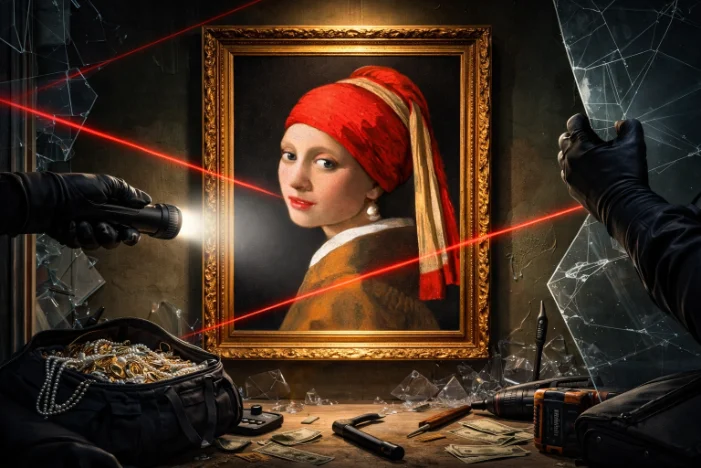
- Confectionery manufacturer, Crime Challenge: From art thief to cookie thief. Story, crime scene and clues revolve around the secret family cookie recipe.
Lead time: 6–8 weeks. Effort: medium. Impact: high — the brand doesn't just appear, it becomes the stage. Participants still talk about it weeks later.
Layer 3 — Flow: Values become experiential
Here comes the depth layer. The flow itself reflects the company's values and identity. An example:
A family business focused on "tradition and community" booked Highland Games with us — but we deliberately built the flow so the closing ritual with fire and singing lasted longer than the competition phase. For a young, dynamic tech vendor we'd have flipped the same flow: competition, performance, fast showdown.
Lead time: 8–10 weeks. Effort: medium-high. Impact: very high, often subconscious — participants say afterwards "that really felt like us" without knowing exactly why.
Layer 4 — Communication: The language of the brand
The finest layer. Moderation, opening and award ceremony are linguistically adapted to the brand's tone. Trainers receive a briefing that covers wording, not just content.
An example: with a conservatively positioned insurance client, trainers briefed apprentices more formally than usual. With a start-up in the same quarter, deliberately more casual. Same format, different layer.
Lead time: 10–12 weeks. Effort: high. Impact: amplifies all other layers.
Which layer pays off when?
- Classic summer party, Christmas party, reward event: Layer 1 is usually enough. The event is the star, not the brand.
- Anniversary, re-branding, post-M&A merger: At least layers 1+2, ideally 3 as well. The brand should be actively experienced.
- Product launch, brand-strategic kick-off: All four layers. The event is part of the brand strategy, not a side dish.
Three common branding pitfalls
- Deciding too late. Wanting deep branding three weeks before the event means you only get layer 1. Story adaptation needs lead time.
- Overdoing it. When every second shouts the brand, the event tips into marketing — and loses team-spirit impact.
- Forgetting tone. Layer 4 is often treated as optional. But without it, the other three layers feel like a suit with the wrong shoes.
More on branding depth and real cases
This article shows the four layers compactly. The full guide with eight branding cases from 25 years, format recommendations by depth, and realistic costs is on the main page: Branded Corporate Event: When Your Brand Becomes Part of the Experience.
Or tell us about the planned event and your brand world. We'll develop a concrete branding concept including depth recommendation. Get a quote →