
Branded Corporate Event: When Your Brand Becomes Part of the Experience
Branding at a team event is more than a printed logo and corporate colours. Done right, it creates an experience employees remember a year later — and that recharges the brand world in their minds. How to do it, from 25 years of practice.
What branding at a team event really means
Branding is often thought of too small: logo t-shirts, a slide deck in corporate design, a banner in the background — done. That's not wrong, but it leaves potential on the table. A truly branded event connects the brand world with the experience itself, not just the visual frame around it.
The decisive difference: with shallow branding, participants see the logo. With deep branding, they experience the brand. For a few hours they immerse in a consistent brand world where story, materials, moderation and tasks are cut from the same cloth. That effect lasts substantially longer than a printed t-shirt.
When the effort pays off
Branded events pay off especially at:
- Company anniversaries — the event is emotionally charged anyway, a brand journey amplifies it
- Product launches and kick-offs — when employees need to internalize a new product world, experience beats explanation
- Post-M&A site mergers — shared brand experiences help bring separated cultures together
- Re-branding phases — employees become the first brand ambassadors when they've lived the new identity themselves
When a standard event is enough
Not every team event needs deep branding. For classic summer parties, Christmas parties or reward events, the experience itself is the priority — visual-only branding (banners, trainer shirts, swag) usually suffices.
The four branding layers
From 25 years of practice: truly branded events combine four layers — not all at equal intensity, but none entirely missing. The deeper you go, the more layers come into play.
Layer 1 — Visual
The obvious layer: colours, logo, typography, materials. Banners at the entrance, branded tablets, trainer shirts in the company look, print materials in corporate design. This is the base that always runs along, because it signals: Something specific is happening for us. Low effort, clearly visible impact.
Layer 2 — Story
The next step: the story of the event gets rewritten into the brand world. For escape formats: not the standard crime case, but one from the client's industry. For city rallies: tasks referencing company history or products. For a quiz: company-specific questions. Medium effort, high impact — because the brand isn't just visible, it appears inside the experience.
Layer 3 — Flow
The more demanding layer: the programme flow itself reflects the company's values and identity. An innovation-focused company doesn't want traditional disciplines — they prefer open, experimental formats. A family business by contrast often benefits from more classic, communal structures. We align the flow to the brand message. Medium-high effort, very high impact.
Layer 4 — Communication
The depth layer: moderation, opening and award ceremony are linguistically adapted to the brand's tone. A young-dynamic tech vendor sounds different from a tradition-rich industrial group. Trainers and moderators are briefed accordingly — and it pays off. High effort, amplifies all other layers.
Rule of thumb: For standard events we use layer 1 (visual) automatically. From "individual adaptation requested" onward, story and flow come in. Deep branding including communication pays off especially for strategically important events like anniversaries or re-brandings.
Which event formats brand best?
Theoretically every event can be branded. In practice, some formats offer significantly more surface for brand messages. From experience:
Top fit for deep branding
- Escape the City and Crime Challenge — story-driven, the whole case can be rewritten to the client's industry. Highest branding leverage.
- Virus Infection — setting is a crisis being playfully solved; translates seamlessly to industry scenarios (cyberattack for IT, production failure for industry, etc.).
- Beat the Box — multiple story scenarios available (hacker attack, bank heist, espionage, mayday in cockpit), story can be matched to industry.
- Team Quiz Show — questions get fully customised. Industry knowledge, company history, insider questions only the team knows.
Good fit with visual and story branding
- GPS City Rally — tasks reference company context (photo challenges at locations, quiz on industry knowledge)
- Highland Games — instead of Scottish clans, themed clans (e.g. by department or product line). Has been successfully rebuilt as "Roman Games".
- Team Challenge — stations can be developed around brand values
Mainly visual branding (story stays largely standard)
- Archery and Crossgolf — sport-based formats with fixed mechanics; visual branding works stronger than story adaptation
- XXL Chain Reaction and Domino Challenge — the final mechanism can be built into the brand shape (e.g. the logo from 1000 dominoes), that's the branding punchline.
Eight examples from our practice
So branding isn't abstract — here eight real examples from 25 years of anydoors history:
1. Escape the Forest for a pet food manufacturer
Instead of a chemical accident, the story was about deliberate poisoning of pet food. The entire story was rewritten, all clues adapted to the client's world. Branding layer: story complete, plus visual materials.
2. GPS City Rally focused on sustainability
A city rally where every task picks up the sustainability theme — stops at local CSR initiatives, quiz questions on the company's sustainability goals. Branding layer: story and flow.
3. Highland Games become Roman Games
Scottish clans became Roman legions. Disciplines adapted, standards replaced, atmosphere completely reimagined. Same concept, completely different experience. Branding layer: story and flow.
4. Team quiz with industry categories
Quiz show regularly used with many clients — questions are 50 %+ from the company's world: history, products, industry, insiders. Branding layer: story (questions) plus communication (moderation).
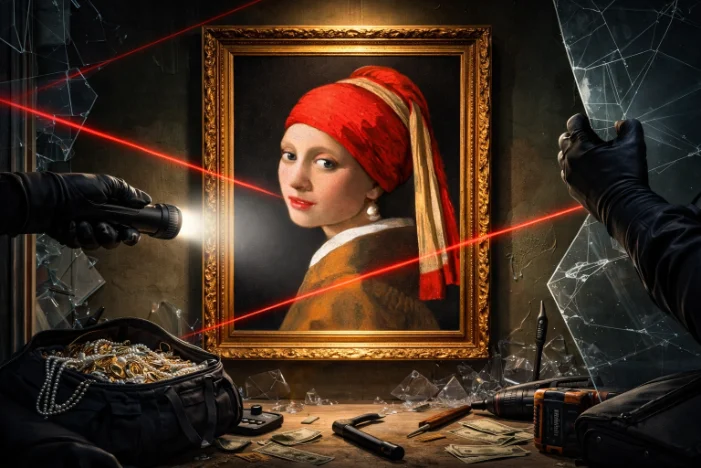
5. Crime Challenge: From art thief to cookie thief
For a confectionery manufacturer, the case wasn't about a stolen painting but about the secret family cookie recipe. Story, crime scene, and clues all rewritten into the client's world. Branding layer: story complete.
6. Beat the Box: Mayday in the cockpit
For an aviation client, the standard hacker attack became a crisis mission: cockpit systems out of action, team has to regain control via encrypted onboard systems. Story mechanic perfectly matched to the industry. Branding layer: story plus visual.
7. Crime City Rally: GPS Rally meets Crime Challenge
Two formats combined: team chases a case across the city, collects clues outdoors via GPS and solves the final case indoors at the crime scene. One coherent whodunit arc spanning two game modes. Branding layer: story plus flow.
8. Christmas double pack: Gingerbread house building and Xmas quiz
Classic corporate Christmas party as a combined day: morning gingerbread house building, afternoon quiz show with company-specific categories. Branding layer: story (quiz questions) plus visual (branding of all materials).
More examples and full case stories at "Custom Events".
Common branding pitfalls
Pitfall 1 — Branding as logo print only
A printed t-shirt and a banner don't make a branded event. Participants see the logo but don't experience the brand. To take branding seriously, adapt at least story or flow — otherwise it stays optics.
Pitfall 2 — Story doesn't match the mechanic
When the story adaptation feels forced, it shows. Example: a city rally with questions obviously twisted onto the company afterwards instead of organically matching the mechanic. Less but fitting is better.
Pitfall 3 — Branding added at the last minute
Deciding three weeks before the event to brand the programme yields visual branding but no real story adaptation. Deeper branding needs 6–8 weeks lead time — story rewrites, material design, trainer briefings.
Pitfall 4 — Branding overkill
When every second of the event shouts the brand, it tips into a marketing event and loses team spirit impact. Branding should be tangible but not crushing. A good test: if participants feel like advertising objects, it's too much.
Pitfall 5 — Externals or apprentices overlooked
When non-core staff joins (external consultants, apprentices, interns), an overly inward-branded event can exclude them. Build in branding elements outsiders can also understand.
Lead time and effort — realistic numbers
From our experience: these lead times and effort levels apply to different branding depths.
Visual branding only
Lead time: 3–4 weeks usually enough. What we do: trainer shirts in the company look, banner production, print materials adapted, tablets with company wallpaper. Cost premium roughly 5–10 % on event price.
Visual plus story branding
Lead time: 6–8 weeks. What we do: story concept jointly developed with client, tasks rewritten, print materials redesigned, trainers briefed on the new story, dry run with client. Cost premium roughly 15–25 %.
Full branding across all four layers
Lead time: 10–12 weeks recommended. What we do: site visit, multiple concept workshops, script with moderation and handovers, communication briefing, multiple alignment rounds. Cost premium from 30 %, significantly more depending on complexity — but the event becomes a strategic communication vehicle, not just team building.
Important: At full branding the event agency isn't a service provider anymore but a strategic partner. That means closer alignment with marketing/brand — and different expectations on response times and commitments.
Frequently asked questions about branded corporate events
What is the difference between a standard team event and a branded event?
In a standard event we run the complete concept and execution with our established format. In a branded event we adapt story, materials, flow and communication to the client's brand world — from logo print to fully rewritten story.
Which events brand best?
Story-driven formats like Escape the City, Crime Challenge, Virus Infection and Beat the Box have the highest branding leverage. The Team Quiz Show's questions can be fully customised.
How long does branded event preparation take?
Pure visual branding 3–4 weeks. Visual plus story 6–8 weeks. Full branding across all four layers 10–12 weeks.
What does a branded corporate event cost?
Starting from the standard event price: visual branding +5–10 %. Visual plus story +15–25 %. Full branding from +30 %.
Can you follow our corporate design exactly?
Yes. We work from your CD specs (colours, fonts, logo rules). All branded materials go through a sign-off round with your marketing team before production.
How is the story adapted so it doesn't feel forced?
First we map the brand world and industry in detail — core story, themes that carry, taboos. Then we adapt the format's mechanic so the change feels organic. When needed, we develop entirely new stories.
Does this work internationally and multilingually?
Yes. All our formats run bilingually DE/EN. Story and materials are adapted in parallel, moderation runs bilingually. For larger language groups we can run multiple parallel teams in different languages.
Do we get the branded materials after the event?
Yes, if desired. Banners, print materials and individually produced items can be handed over after the event. Standard play equipment stays with us.
What sets anydoors branding apart from competitors?
We brand from 25 years of actually executed cases, not from workshops. Our "Custom Events" page shows eight real branding cases — from pet food to aviation. Practice, not theory.
Can you brand just parts, e.g. a quiz show inside a conference?
Yes — modular branding is a common request, e.g. a branded quiz show as conference evening programme or an escape sequence as a meeting highlight. Less lead time, more manageable cost premium.
Make your brand world tangible? We develop it with you.
Tell us about the occasion and your brand world. Within 24 hours you get a concrete concept — format, branding depth and transparent quote. From logo print to full story adaptation.